
Can you submit an AI-generated image to a scientific journal?
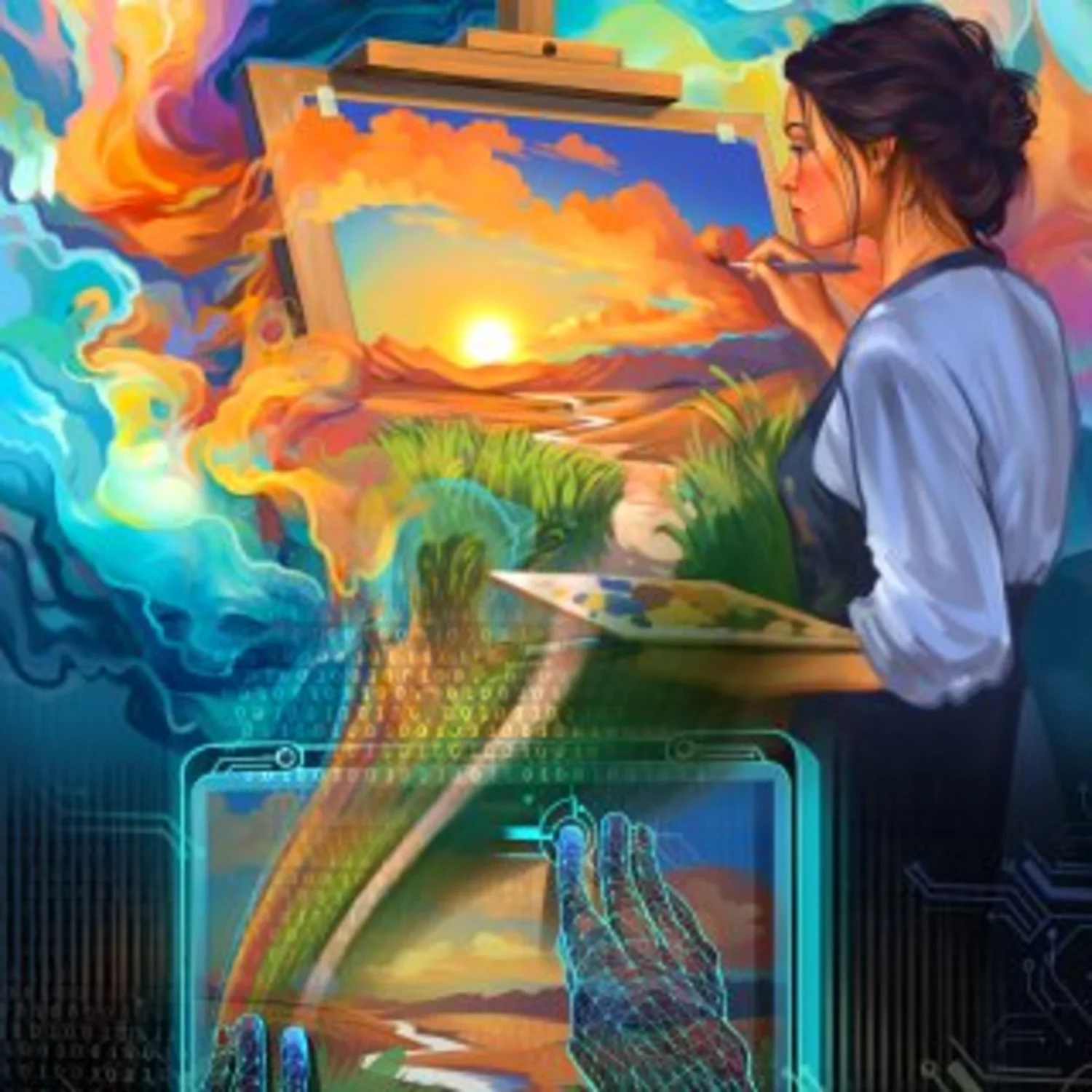
Can you submit an AI-generated image to a scientific journal?
Not always – and the rules depend heavily on the journal.
In our new Matter of Opinion, “Patchwork policies: Mapping the divergent AI-image rules in scientific journals,” published in Matter by Cell Press, we looked at how journals handle AI-generated visuals.
https://www.cell.com/matter/abstract/S2590-2385(26)00065-2
What we found is a real patchwork of policies.
Some journals completely ban AI-generated images, others allow them only with disclosure, and a few take a more flexible approach. For authors, this creates a confusing landscape when deciding what is acceptable before submission.
🔎 To clarify this landscape, we summarized policies across many major publishers in a table below.
We grouped journals into three categories:
▪️ AI images not allowed.
▪️ Allowed with conditions.
▪️ Flexible or experimental policies.
Summary of selected journal and publisher policies on AI-generated images
| Category | Publisher / Journal | Policy Summary |
|---|---|---|
| Flexible / Experimental | Wiley | Supports AI-assisted concept creation for covers if usage rights are secured and declared. |
| Royal Society of Chemistry (RSC) | AI-assisted graphics are allowed if the tool uses licensed datasets and the output license permits commercial reuse, provided the artwork remains original and suitable for scholarly publication. | |
| BMJ (General Policy) | Currently evolving stance; emphasizes transparency and editorial discretion. | |
| Allowed with Conditions | ACS Publications | Permits AI-generated cover art if tool use is disclosed and authors confirm legal rights for reproduction. |
| IEEE | Allows AI-generated illustrations if tool name, prompt, and disclaimer are cited in the caption. | |
| MDPI | AI use in text, figures, or analysis must be declared in Methods or Acknowledgments. | |
| Frontiers | AI-generated figures are accepted if accurate, plagiarism-free, and transparently acknowledged. | |
| SAGE | Requires disclosure of any AI tools used for writing, visualization, or data creation. | |
| Cambridge University Press | AI use must adhere to authorship and plagiarism standards and be properly acknowledged. | |
| Lippincott Wolters Kluwer | Authors may use AI for figures if disclosed; responsibility for accuracy remains with authors. | |
| MIT Press | Allows AI for text or figures if disclosed; prohibits AI in peer review or editorial decisions. | |
| Emerald Publishing | Permits AI diagrams and illustrative images if labeled and ethically used, not for data or covers. | |
| BMJ | Accepts AI-assisted content with full disclosure and editorial review. | |
| World Scientific | AI tools can assist with text or visuals if clearly disclosed and reviewed by editors. | |
| ACM | Allows AI-generated visuals with complete disclosure of tools and human oversight. | |
| Karger | Permits AI use if declared, verified, and cited; hidden AI use breaches ethics. | |
| Medwin Publishers | Allows AI images if justified and accompanied by human-written explanatory captions. | |
| Not Allowed | PNAS | No AI-generated or stock images permitted for covers; artwork must be original and scientifically representative. |
| Cell Press / Elsevier | AI-generated images not accepted for covers or figures, unless AI is part of the research methodology (e.g., biomedical imaging). | |
| Taylor & Francis | Prohibits generative AI in the creation or manipulation of figures, images, or research data. | |
| Springer Nature | Does not permit AI-generated images or videos, except for verified scientific data in AI-related research. | |
| Science / AAAS | AI-generated images or multimedia are not allowed without explicit editorial approval, except for AI/ML studies. | |
| De Gruyter | Disallows AI-created or modified research images; AI text use must be disclosed. | |
| IOP Publishing | AI tools cannot create, alter, or manipulate original data images; only standard charting tools may be used with citation. | |
| PLOS | Forbids AI use in generating or modifying data images such as blots, microscopy, or gels. | |
| APS (American Physical Society) | Prohibits use of fabricated or AI-modified images as substitutes for real data. | |
| Inderscience Publishers | Does not accept figures or images produced with generative AI, any AI text use must be declared. | |
| KeAI Publishing | AI-generated images not permitted except with prior editorial approval for cover art or AI-specific research. | |
| IGI Global | Strictly forbids AI-generated images or videos and any AI manipulation of visual data. | |
| Thieme | AI-generated images are prohibited unless approved by an editor and accompanied by a disclosure statement. | |
| eLife | Screens all submitted figures for manipulation and accepts only authentic, experimentally derived images. | |
| JAMA Network | Discourages AI-created medical images unless part of a validated research study; requires full disclosure. | |
| Oxford University Press | AI-generated images are banned unless they illustrate AI itself and have editorial consent. |
But the differences between policies highlight a deeper issue.
Many journals now ask authors to disclose the AI tool used. However, disclosure alone does not answer a critical question:
Were the images used to train the model created and licensed with permission?
Our conclusion:
Disclosure ≠ Permission.
Simply naming an AI tool does not guarantee that the training data was licensed or that the resulting image can legally be used in a publication.
Beyond legal concerns, AI-generated visuals can also introduce scientific inaccuracies (“hallucinations”) that look convincing but are factually incorrect, and generating them can also have a significant environmental footprint.In our view, AI-generated images should be allowed only when the models were trained on datasets developed or licensed with proper permissions. At the same time, there is a need for a clearer, unified approach that encourages innovation without compromising scientific integrity.

What software can I use to make 3D scientific illustrations?
